
A Solution for Every Challenge
Every trench is different. Soil conditions change, access can be tight, and timelines rarely leave much room for delays.
Most unsupported trench walls may hold their shape for a while, but none remain stable forever.
Contractors use several methods to manage trench safety. Some rely on shaping the excavation itself. Others use engineered support systems to hold the trench walls back and protect workers.
In this blog we look at the main approaches used on New Zealand worksites. We explain how each method works and where it’s most suitable. Whether you’re working on open greenfield developments or in tight urban areas, the goal is always the same: protect the crew and keep the job moving.
1. Sloping
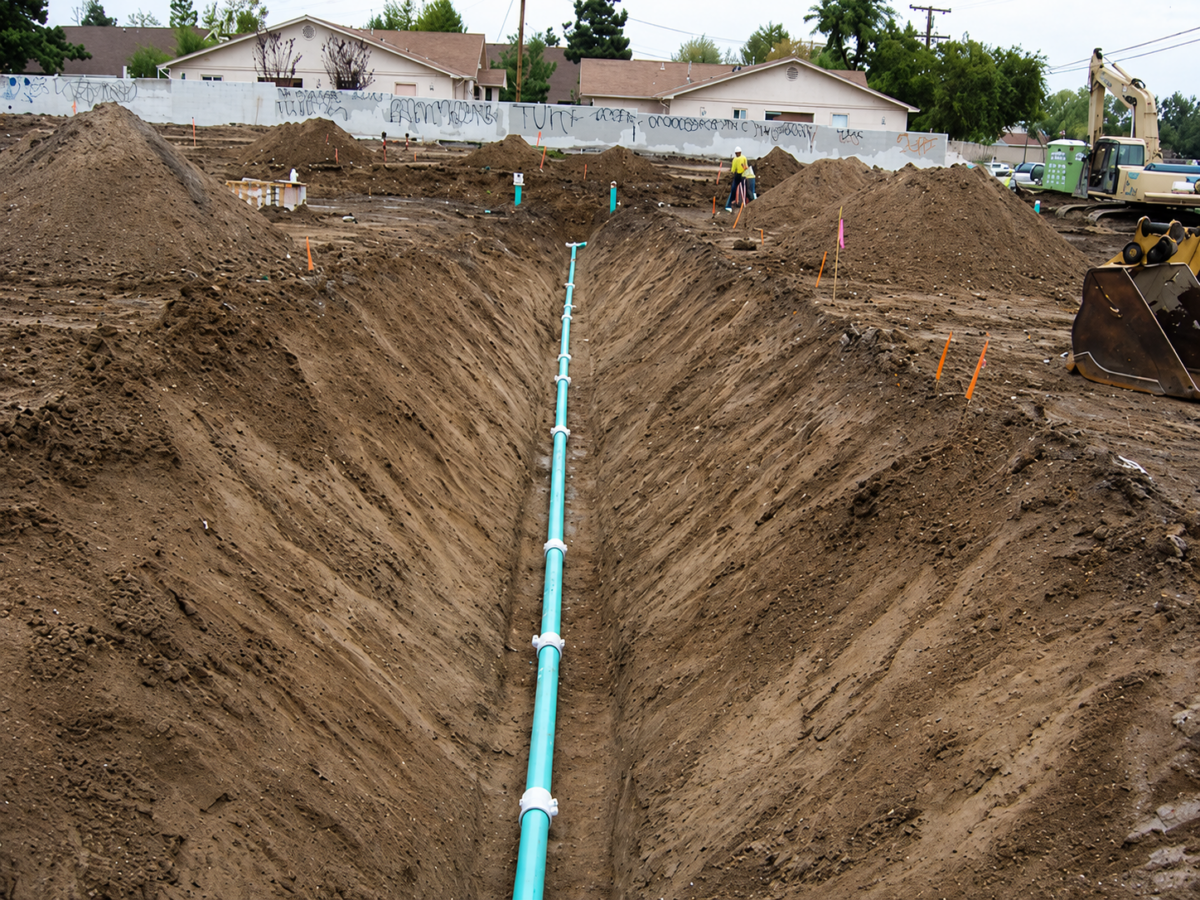
What is sloping?
Trench sloping prevents trench walls from collapsing by cutting the trench sides at an angle instead of leaving them vertical.
Reducing the angle reduces pressure from surrounding soil and helps keep the excavation stable for workers.
The angle of the slope depends on soil type. Hard clay can hold a steeper slope than loose sandy soil. The looser the ground conditions, the more space you need to safely slope the trench.
2. Benching
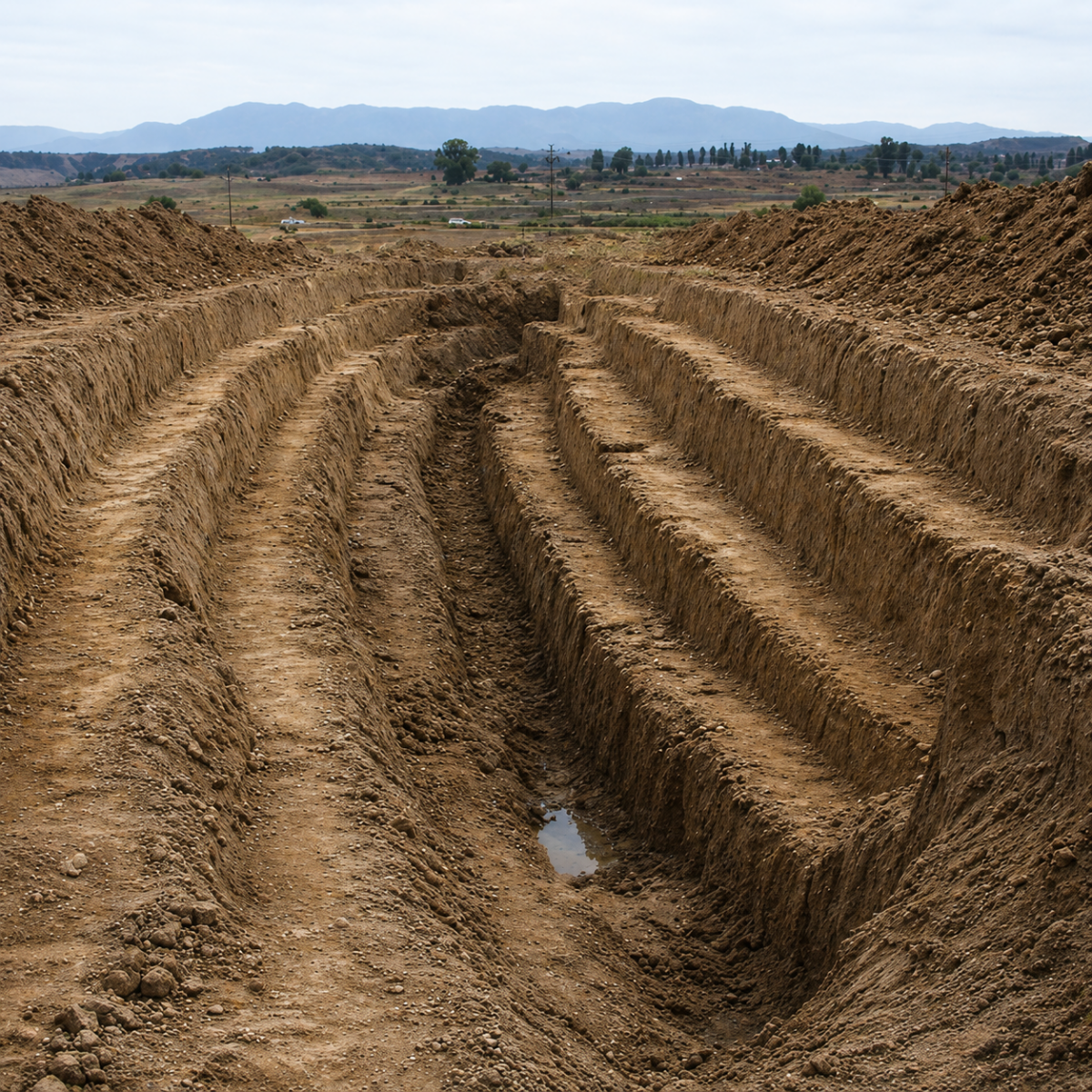
What is benching?
Trench benching protects trench walls by cutting them into a series of horizontal steps, known as benches, instead of forming one continuous slope.
Like sloping, the aim is to reduce the risk of collapse. Instead of relying on one angle, the soil pressure is broken up by staggered levels.
These steps work like stairs and help relieve pressure on the trench walls.
Benching works best in strong, stable soils such as clay (Type A or B). It is not safe in loose or sandy soil (Type C).
Compared to sloping, benching uses less space but still requires careful design and execution.
Both sloping and benching reduce collapse risk by moving soil away from the trench and lowering ground pressure. They are most commonly used where space is not an issue, such as greenfield developments.
If soil conditions are understood, aquifers are not present, and the right equipment is available, these methods can work well.
3. Soldier Sets

What are soldier sets?
There are two different types of soldiers, manual and hydraulic. Hydraulic sets use fluid-powered pistons for active, high-pressure support that pushes against the trench walls to keep them apart, while manual sets use mechanical screw jacks (acrow props) for manual adjustment that support the trench walls.
They consist of vertical rails called soldiers and manually adjustable or hydraulic struts that hold the trench walls in place or push outward against the trench walls to hold soil in place.
Lightweight manual soldier sets are designed specifically for smaller contractors, such as drainlayers, who may not always have access to heavy machinery.
The most common is the 2.4 set that weighs approximately 38kg, allowing it to be handled manually without needing a digger. This makes it well suited to tight spaces and quick setups.
Click this link to see soldier sets:
Click this link to see hydraulic soldier sets:
4. Shielding (The Most Common Method)

What is shielding?
A trench shield is placed inside the trench after excavation.
It usually consists of two strong parallel panels, typically made from steel or aluminium, connected by adjustable or fixed struts.
These panels create a protective barrier between workers and collapsing soil.
Unlike sloping or benching, trench shields can be used in any soil type.
Guardian shields are made from lightweight aluminium, making them easier to position in tight working areas, as you can use a smaller machine.
They require less excavation than sloping or benching, saving time on digging, along with reinstatement costs and the time and materials to slope or bench. This makes them especially useful in established residential areas where working space is limited.
Find out more about aluminium shields here:
5. Half Shielding

What is half shielding?
Half shielding combines two proven safety approaches.
The upper section of the trench is sloped or benched, reducing the risk of surface collapse.
The lower section is protected by a trench shield, where soil pressure is typically greatest.
This hybrid approach helps keep workers safe while reducing the amount of excavation required. It can also lower material and site costs.
It works well where space is limited but not completely restricted.
Like all trench safety systems, this approach must still be properly engineered, ensuring the transition between slope and shield remains secure and compliant.
6. Modular Manhole Boxes

What are modular manhole boxes?
Modular manhole boxes are highly versatile systems.
They can be configured as:
• A trench shield
• A three-sided box
• A fully enclosed box, etc
Like standard trench shields, they hold soil back and protect workers inside the excavation.
One key advantage is the ability to remove up to two bottom panels, allowing pipes or services to pass through while maintaining protection.
Because the panels are lightweight, these systems can be assembled, dismantled and transported on a ute or trailer.
They are commonly used for installing manholes and pipes or fixing laterals.
Find out more about manhole boxes:
Find out more about modular manhole boxes:
Important notes:
Combining components from different manufacturers to make a trench safe can create structural risks, as inconsistent standards may mean they’re not compatible.
Some contractors build their own trench boxes, but these must be assessed and signed off by a professional engineer before use on site. Skipping that step is a clear breach of safety standards—and basic judgement.
Learn More About Trench Safety
To find out more about excavation safety:
WorkSafe excavation safety guidance:
To sign up for an excavation safety course:
Or call the Guardian team on 0508 41 41 41 to talk through your project requirements.
Disclaimer
This blog is for general information only and does not constitute engineering advice. Trenching conditions vary widely — always consult a competent person or qualified engineer before starting any excavation work.
Guardian is not liable for any injury, damage, or loss resulting from the misuse or incorrect application of trench safety products mentioned here. Use equipment responsibly and follow all WorkSafe NZ guidelines and regulations.